
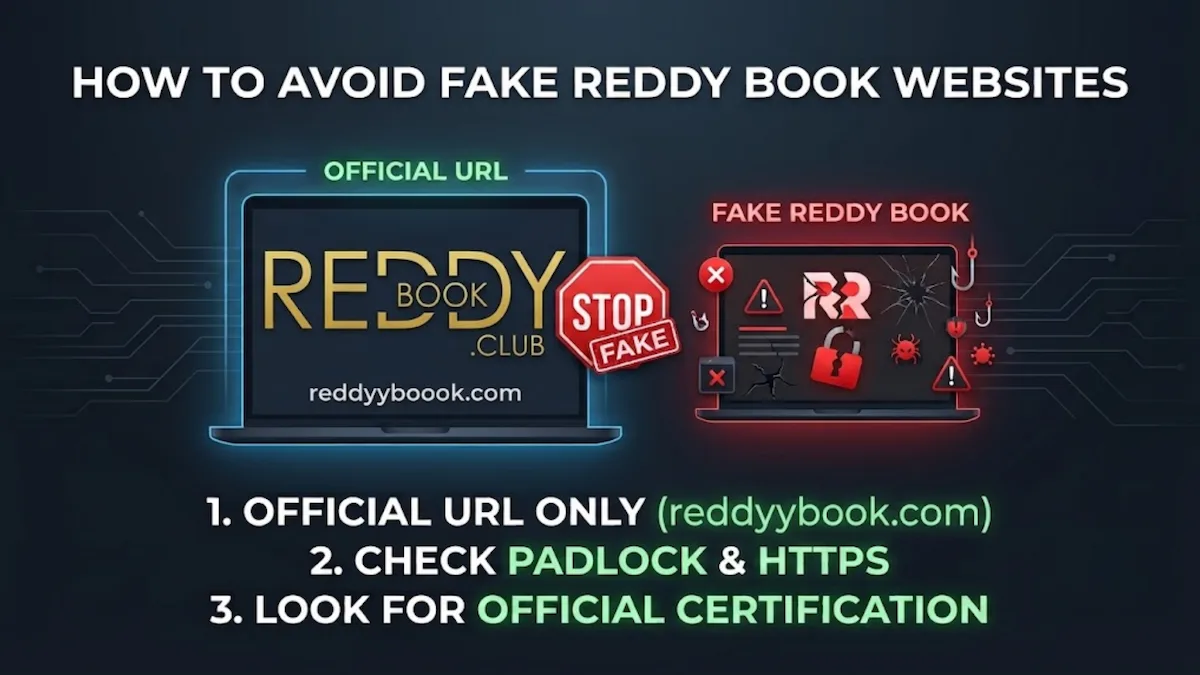
Hacking has become more common than ever due to advancements in technology, and it has become extremely important to depend only on legal, authorised websites. Users should be mindful before sharing any personal details online.
Before entering login information, make sure the website is genuine by carefully examining the URL and comparing it to trusted sources like app stores, verified social media profiles, or written communication from the official Reddy Book website.
Verify the padlock icon and use HTTPS encryption where the url is mentioned, but never depend solely on it as evidence because frauds can obtain certificates for identical domains unethically. And use the official app or link only, instead of, search results or advertisements, which are often compromised. This article will help you understand how to differentiate between a real and fake Fake Reddy Book website.
Table of Contents
Why fake betting websites are dangerous
Attackers misuse the personal information, payment information, and login credentials that are stolen by fake gambling websites for identity theft, fraudulent transactions, and money.
Fake sites can also record one-time passwords, contain viruses or hacking programs, and offer attractive false rewards to trick users into making non-refundable deposits. Sometimes, these hackers can use your account to commit some serious crimes like, money laundering which can cause legal actions against you.
How to identify an official Reddy Book website
To know if the site is a real Reddy Book website and not a Reddy Book scam, verify by visiting the social media pages, app store listing or contacting the customer support team. After making sure the padlock icon and HTTPS connection are genuine, check the domain name for any minor typos or extra words (for instance: reddybook\login.com ).
Few signs through which you can identify a fake site include weak content, abnormally low odds, or suspicious ads. Keep an eye out for consistent branding, official contact details, and current activities such as updates or announcements. Points to keep in mind while using an official Reddy Book website are:
- Check the correct website URL carefully
Try to figure out typos by going through the url manually, and match the url directly from their social media handles.
- Look for HTTPS and the padlock icon
These signs usually mean that the data in transit is safe and protected. Make sure you notice both these symbols are present before sharing any personal information online.
- Verify the domain name before logging in
Notice the typing mistakes throughout the page to confirm if you are on the legit domain.
- Use official customer support channels
Only use the phone numbers, emails, or social media accounts provided on the platform’s official accounts or the verified app store listing to get in touch with customer support.
- Bookmark the genuine website after confirming it
Save the website as a browser bookmark or home screen shortcut after you’ve confirmed it’s the correct website.
10 signs of a fake Reddy Book website
- Wrong or misspelled domain name
Look closely for errors, extra letters, words, or unusual upper-level urls (like.xyz or.club) that look like the official address.
- No https security certificate
Avoid entering login credentials or payment information on websites that don’t use https or a padlock as this means that they don’t protect data while it’s in transit.
- Poor website design and broken pages
A poorly designed or carelessly copied website is often identified by disorganized layouts, missing graphics, broken links, or pages that don’t load.
- Fake customer support numbers
False phone numbers or messaging contacts that either don’t work or lead to scammers are listed on fraudulent websites; confirm contacts using legitimate app listings or verified social media accounts.
- Unrealistic bonus or jackpot claims
Offers that seem too generous or put pressure on you to make a deposit right away are probably a scam to get your money beware of these kinds of messages or ads.
- Requests for sensitive information
Complete bank PINs, card CVV via chat, or OTPs are never requested by reputable betting sites; any such request is a serious sign of scam.
- Suspicious payment methods
Risky websites require untraceable channels like, crypto-only, direct wallet transfers, or third-party agents instead of regular bank, card, or payment gateways. Keep an eye out for such sites and requests.
- Too many pop-up ads
Excessive pop-ups, fake “security alerts,” or forced downloads are common signs of a suspicious website attempting to spread phishing software or viruses to avoid clicking these.
- Poor grammar and spelling
Repeated grammatical mistakes, incorrect wording, or text that has been machine-written show that the website is either quickly generated or poorly maintained which are signs of a fraud website that users should avoid.
- No privacy policy or terms and conditions
If there are no legal documents, unclear user agreements, or missing license information, the website is not trustworthy and provides no consumer protections.
How to verify you’re using the correct website
You can use the brief, practical checklist below to be sure you’re on the right Reddy Book website. Use it before making a deposit, logging in, or entering any payment or confidential data.
- Verify the URL
Type address manually or copy it from the official app store description; look for typos, extra words, or irregular URLs in each character.
- Check https encryption
Verify the https encryption, check for spelling errors and click the padlock icon to view the certificate and confirm the provider and domain.
- Review the contact page
Verify that the phone numbers, email addresses, and support channels match with those found on legitimate social media accounts or verified app listings.
- Confirm official social media announcements
Check for any recent domain updates or notifications by comparing the domain with posts or links on the platform’s verified social media accounts.
- Compare branding and logos
Verify that the official branding is reflected in the logos, fonts, and color schemes; inconsistent or low-resolution materials are signs of scam.
- Avoid links from unknown sources
Links from spam, advertisements, forums, and direct messages should be avoided as they are commonly used as phishing channels.
- Bookmark the verified website
Save the verified link for future use, this will help you avoid spam sites and unwanted advertisements that are harmful.
What to do if you visit a fake website
If you come across a fake Reddy Book website, follow the points mentioned below that will explain what steps to follow.
Step 1: Leave the website immediately
To prevent the virus from collecting personal data, leave the site instantly and close the tab or window and avoid using any page features, downloads, or pop-up ads.
Step 2: Do not enter login or payment details
Avoid entering your personal information, bank account details and otps on unauthorized websites.
Step 3: Change your password if you entered it
Immediately change your password, if you feel or notice any suspicious activity on your profile.
Step 4: Contact official customer support
Get in touch with the official customer service team, as soon as possible, if you think your account has been compromised.
Step 5: Monitor your account for unusual activity
Keep checking your account regularly to prevent any unapproved entry or data and identity theft.
Step 6: Report the suspicious website
Run a thorough antivirus/antimalware scan if you clicked on any downloads, and if viruses are discovered, try to reset your device. Also remember to inform Reddy Book official website, and the legal authorities like the cyber-crime department, if necessary.
FAQs
1. How can I identify a fake Reddy Book website?
You can find out if the site is fake or not by, going through the, website and noticing, typing mistakes, wrong urls, poor layout, wrong branding, etc.
2. What is the official way to access Reddy Book?
Reddy Book should always be accessed from the official website URL posted on verified social media, the verified app store description (Google Play/App Store), or bookmarks you saved after verifying authenticity.
3. How do I know if a website is secure?
A secure site uses https with a valid certificate and displays a padlock, and it also reveals the certificate holder, domain name, marketing quality, a privacy policy, and genuine contact information.
4. What should I do if I entered my password on a fake website?
If you enter your password on the wrong website then change your password immediately via the official website or app, turn on two-factor authentication, update any other accounts that use the same password, report the issue to Reddy Book support, and keep a close eye on activities.
5. Can fake websites steal my personal information?
Yes, in order to commit identity theft, account takeover, or financial fraud, scam sites may get your login passwords, personal identification, bank or credit card information, and OTPs.
6. Is HTTPS enough to prove a website is genuine?
No, HTTPS does not authenticate the identity of the site’s operator; instead, it just guarantees protection while the data is in transit.
7. How can I report a fake Reddy Book website?
You need to send a phishing report to your browser (Chrome, Firefox, or Edge), alert your search engines, report the URL to Reddy Book and make a complaint with local cybercrime authorities too.
8. Should I download the app from unofficial websites?
No, only download apps from legitimate app stores or the official website link offered by reliable Reddy Book platforms.
9. How can I verify customer support is genuine?
When in doubt, contact support from the verified app to confirm credibility. Verify phone numbers, emails, and live chat links against the contact details on the verified app store description or official social media platforms.
10. What are the common signs of a phishing website?
Misspelled URLs, missing HTTPS, poor grammar, unrealistic offers, phony contact information, a lot of popups, requests for OTPs or CVV, and pressure to make a deposit right away are common signs that should raise doubts.
11. Can fake websites steal my payment details?
Yes, in addition to forcing transfers to illegal wallets and stealing card information, CVVs, and bank passwords, fraudulent websites may also divert payments through unauthorized channels, making refunds challenging and recovery time-consuming.
12. How often should I change my password?
If you detect a hacking attempt, change your passwords immediately. For important accounts, you should think about changing them every three to six months.
13. Is two-factor authentication recommended?
Yes, using OTPs, authenticator applications, or two-factor authentication (2FA) adds a secure second layer of security beyond passwords.
14. Can fake bonus offers be a scam?
Yes, scammers often use false bonuses as a bait to get deposits or login information before restricting your withdrawals. Never share OTPs or information to get a bonus; instead, check offers against official announcements before responding.
