
Nowadays, people choose online services since they are fast, convenient, and available at any time of the day. It is particularly relevant to the online gaming and digital entertainment sector, as users expect seamless and swift access. However, when finances and private information become a subject matter, trust becomes a crucial factor. All users want to be confident about the safety of the platform they use.
Reddy Book provides users with a solid system of security that includes measures such as KYC (Know Your Customer), AML (Anti-Money Laundering), and identity verification. They are aimed at verifying all users who join the platform. It ensures users are aware of no false accounts or fraudulent activity from other users’ side. Besides, it increases the level of safety for users in the online gaming area.
Additionally to the verification process, Reddy Book uses a reliable and solid payment system, which protects all transactions from possible threats. If a user makes an online deposit or withdraws money, all transactions will go through safety controls.
All those measures are taken to increase users’ trust. In some cases, a system allows verified users to receive instant withdrawals depending on certain factors.
Table of Contents
What Is a Payment Gateway?
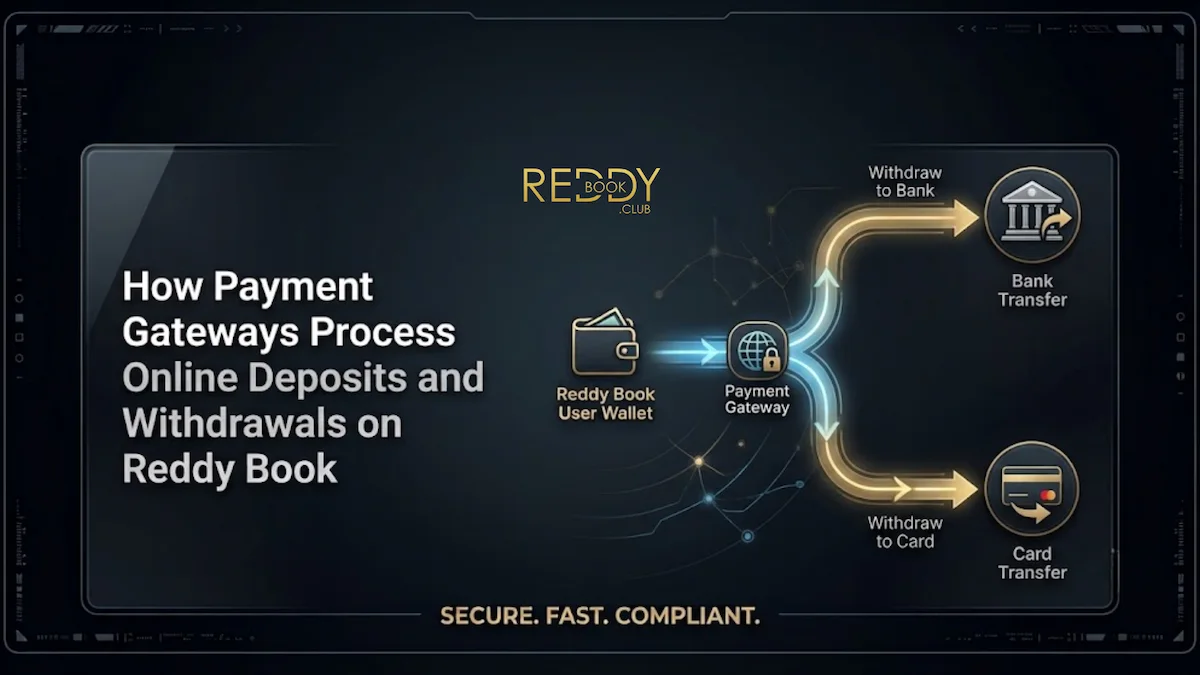
The payment gateway is an encrypted process that facilitates the process of making payments safely from one person to another via the platform. The payment gateway acts as a security bridge connecting the bank, the user, and the Reddy Book platform.
Any time a user makes a transaction, the payment gateway makes sure all the transaction details are processed safely and securely.
The importance of a trusted online payment gateway is critical because it safeguards any financial data from abuse.
The Reddy Book payment gateway guarantees all Reddy Book users safe transactions.
A payment gateway helps:
- Keep transactions safe and secure
- Protect user payment information
- Support online deposits and withdrawals
- Improve system trust and reliability
- Reduce chances of fraud or misuse
This is one of the main reasons users trust the platform.
How Payment Gateways Process Deposits
Even when users perform their online transactions, it seems extremely fast and easy from the front end. However, from the backend of the system, a payment gateway performs all of its functions with utmost security and in a step-by-step manner. It is extremely important for any kind of transaction involving money, privacy, and trust.
It is particularly important in the case of Reddy Book because users always require security in their online deposits and withdrawals. Hence, for the same reason, an entire payment gateway has been established.
The following are the steps involved in making safe and trust-based deposits.
1. User Selects a Payment Method
The first step involves the user’s selection of the preferred method of making payment. The various payment gateway systems on the internet ensure that there are several modes from which the user may choose the one which suits them best.
Common payment methods include:
- UPI (Unified Payments Interface)
- Debit cards
- Credit cards
- Net banking
- Bank transfers
- Digital wallets (where available)
With the Reddy Book payment gateway, all these modes of payment are offered in a secure environment for the users of the Reddy Book application.
This step might seem quite simple, but it is of utmost importance because this is where the payment process begins.
2. Payment Details Are Securely Transmitted
Once the payment method is chosen, the user needs to input their payment details. These details are highly confidential and need to be safeguarded at all times.
This is when the secure payment gateway proves to be very important indeed. The reason being that encryption technology is used to encode all the payment details in such a manner that nobody else can make any use of this information.
All the encrypted details are then transferred from the user’s computer to the bank or the payment gateway in a safe manner.
This is a quick process, but the most important one from the point of view of security in the entire transaction process.
3. Verification and Authorisation Occur
Once the payment details have been forwarded to the bank, the next stage starts. Verification of the transaction is done to ensure that it is safe and valid.
During this stage, the system checks:
- Whether payment details are correct
- Whether the account has enough balance
- Whether the transaction is allowed
- Whether any unusual or suspicious activity is detected
Sometimes, additional verification steps such as an OTP or identification might also be needed. In this case, the help of KYC and AML systems is utilised because it ensures that the user is verified in order to carry out transactions.
This stage is critical since it prevents fraud from happening and ensures the security of the online payment gateway system.
4. The Transaction Is Approved or Declined
The last decision regarding the future of the transaction is taken by the bank or payment system after the verification process.
When all the conditions have been met, the transaction is approved. However, when they are not, the transaction is declined.
Reasons why transactions may be declined:
- Payment details were provided incorrectly
- Not enough funds
- Security policies of the bank
- Network issues
- Detection of suspicious activities
It guarantees that the transaction is secure and legitimate. It is very important to maintain trust in the payment gateway system.
5. Funds Are Credited According to Platform Processes
After the transaction is authorised, the last phase is the funding of the deposit into the account.
The funds are deposited onto the platform and credited to the customer’s account according to certain internal processing principles. Typically, this occurs quite fast; however, there are numerous factors affecting the time of the deposit.
These include:
- Bank processing speed
- Payment method used
- Security and verification checks
- Platform rules and system load
Also, some platforms have Instant Withdrawal or quick deposit options that depend on the approval and verification process.
This step marks the end of the entire deposit procedure.
How Withdrawals Are Typically Processed
Withdrawal simply refers to the withdrawal of money from the platform and then making sure that this money gets transferred into the bank account or other payment method chosen by the user. Similarly to deposits, there is also a proper and secure procedure in place when it comes to the withdrawal of money. This makes sure that everything is done correctly, safely, and mistake-free.
Below is the straightforward process of withdrawal in the safe system.
1. User Submits a Withdrawal Request
The procedure for making a withdrawal starts once the user decides to withdraw funds from their account.
In this step, the user:
- Enter the withdrawal amount
- Selects a payment method such as UPI, bank transfer, or wallet
- Confirms the request
Normally, most online payment gateways are designed in such a way that this stage is convenient for the user. The user can pick among several choices in the Reddy Book payment gateway platform, as per availability.
It may look simple, but it is one of the key stages in the whole process of making a safe withdrawal.
2. The Platform Performs Required Verification Checks
Once the request is made, the system undertakes crucial security checks.
These checks may include:
- User identity verification (KYC)
- Account ownership confirmation
- Fraud detection monitoring
- AML (Anti-Money Laundering) screening
This stage is highly critical since it guarantees that only the actual account holder will be able to make withdrawals from the account. A good payment gateway system will always have such security measures.
In case of any suspicious activity, the withdrawal request might be held for further investigation.
3. Payment Instructions Are Processed
After the verification process, the payment gateway prepares the withdrawal instructions.
This includes:
- Confirming the selected payment method
- Preparing the transfer request
- Sending instructions securely to the banking system or payment provider
The online payment gateway, in this case, acts as an intermediary between the platform and the banks to ensure that all instructions are safely passed through.
This process ensures that everything is arranged correctly before the transfer of funds.
4. Funds Are Transferred Through the Selected Payment Channel
After processing the instructions comes the process of transferring the money.
Money will be transferred using the preferred mode, which can include:
- UPI transfer
- Bank account transfer
- Wallet transfer (if available)
The time required for this step may vary depending on:
- Bank processing speed
- Payment method used
- Security and verification checks
- Platform rules and system load
Some systems allow for Instant withdrawal, while some might take a couple of minutes, depending on banking and verification requirements.
5. User Receives Confirmation When Processing Is Complete
Once the entire process is successfully carried out, the last stage is confirmation.
The user receives:
- A notification or alert
- Withdrawal status update
- Transaction confirmation details
This ensures that the funds have been safely processed via the secure payment gateway and have either been sent or deposited into the user’s account.
This is an important step in building trust and confidence among users every time there is a withdrawal.
Why Payment Gateways Matter for Reddy Book Users
Payment gateways have great importance in the sense that they provide greater security, speed, and efficiency in online payment systems. Whenever users perform any kind of transaction through the Internet, they desire complete security for both money and personal information. Payment gateways help ensure such security at all times.
Key benefits include:
- Protection of sensitive payment information during every transaction
- Smooth and easy online deposits and withdrawals without confusion
- Reduced risk of fraud, hacking, and unauthorised access
- Support for multiple payment methods like UPI, cards, and net banking
- Faster and more reliable transaction processing
With respect to Reddy Book users, the Reddy Book payment gateway takes care to ensure that each payment undergoes all the required security processes and verifications. This way, the users are able to carry out transactions with ease and without fear of their data being exposed or misused.
An effective payment process will enhance security as well as foster trust between users and the platform. It will also improve the overall user experience while doing online activities.
Security Features Used by Modern Payment Gateways
All modern payment gateways come equipped with various security measures to ensure the safety of both users and transactions.
1. Encryption Technologies
The payment details are encoded into a safe code to prevent any hacking attempts.
2. Secure HTTPS Connections
It helps maintain the safe communication process between users and servers.
3. Tokenisation
The sensitive information is replaced with unique tokens for added security.
4. Fraud Detection Systems
They monitor the transactions and detect any suspicious activities.
5. Risk Monitoring
Constant monitoring to detect any unusual activities.
6. Two-Factor Authentication (2FA)
Provides additional protection via OTP.
Common Payment Methods Supported Through Gateways
The major payment gateways allow for payments through different mediums to provide flexibility in payments.
The common ways of making payments through a payment gateway are:
- UPI
- Debit cards
- Credit cards
- Net banking
- Bank transfer
- Digital wallets
These methods allow users to make online deposits and withdrawals with ease and convenience.
Common Reasons a Payment May Be Delayed or Declined
In some cases, there is a failure of payments because of small mistakes, such as:
- Wrong payment information
- Not enough money
- Delay in the bank-side verification
- Internet connection problems
- Security issues
- Technically related problems
This is common in any online payment gateway process, and it gets solved fast.
Tips for Safe Deposits and Withdrawals
The following are some useful guidelines that people should consider when using the online payment system:
- Using secure devices and networks
- Verifying the authenticity of the website before making payments
- Utilising security services such as one-time password (OTP) and two-factor authentication (2FA)
- Maintaining up-to-date payment information
- Checking transaction history regularly
- Reaching out to official customer service for help
Such practices will help make online deposits and withdrawals safe and efficient.
Final Note
The KYC process, AML policies, and identification procedures play a critical role in the modern world of electronic payments. They guarantee that only real users have access to financial services and reduce the risks of fraud and other violations.
Thanks to the assistance of an adequate payment gateway, platforms like Reddy Book will be able to offer their users safe and quick deposits and withdrawals. Such security systems help to protect customers and establish trust among all participants.
FAQs
1. What is a Payment Gateway?
It is a system through which payments are processed safely from customers to banks.
2. How does a payment gateway process deposits?
Payment details verification, bank approval and crediting of funds to the account.
3. How are withdrawals handled?
Withdrawals get verified, processed and moved to the payment method chosen by the user.
4. Are payment gateways secure?
Yes, they provide encryption, fraud detection and secure connections.
5. Why might payments fail?
Due to incorrect information, insufficient balance, bank problem or technical issue.
6. Can payment gateways prevent fraud?
Yes, they can prevent fraud by detecting any suspicious activity.
7. What payment methods are supported?
UPI, card, net banking, bank transfers and wallets.
8. How long do withdrawals take?
It depends on each individual platform and bank.
9. What is the difference between a gateway and a processor?
Payment Gateway protects customer information, while a Processor handles the fund transfer.
10. How can users stay safe?
By using a secure internet connection, activating safety features, and tracking transactions.
